

Signs of Arthritis in Dogs
Recognising the Early Signs of Arthritis in Dogs
Arthritis in dogs often develops gradually.
Many owners expect obvious limping or severe pain, but in reality, the earliest signs are frequently subtle and easy to overlook.
Often, owners notice small changes over time:
-
Their dog seems slower getting up
-
Walks become shorter
-
Jumping into the car becomes harder
-
Playfulness decreases
-
Stiffness appears after resting
Because these changes happen gradually, many families assume their dog is simply “getting old.”
In many cases, however, arthritis is already affecting comfort and mobility.
Recognising the early signs of arthritis can help dogs receive support before weakness, stiffness, and mobility decline progress further.
Just exploring whether your dog may have arthritis? We’re happy to answer questions with no pressure or obligation.
What Is Arthritis in Dogs?
Arthritis is a condition involving inflammation and degeneration within joints.
Over time, the smooth cartilage that normally cushions the joint becomes damaged. This can lead to:
-
Pain
-
Stiffness
-
Reduced mobility
-
Muscle loss
-
Difficulty moving comfortably
Arthritis may affect:
-
Hips
-
Knees
-
Elbows
-
Shoulders
-
Spine
-
Toes and wrists
Some dogs develop arthritis naturally with age, while others develop it secondary to conditions such as:
-
Hip dysplasia
-
Cruciate ligament injuries
-
Elbow dysplasia
-
Luxating patella
-
Previous injury or surgery
Learn more about:
-
Hip Dysplasia in Dogs
-
Cruciate Ligament Injuries in Dogs
.jpg)

Common Signs of Arthritis in Dogs
Stiffness After Resting
One of the most common early signs is stiffness after rest.
Dogs may:
-
Walk stiffly after sleeping
-
Take time to “warm up”
-
Appear sore first thing in the morning
-
Struggle getting up from lying down
Many dogs improve slightly once they start moving.
Difficulty Jumping or Climbing Stairs
Arthritic dogs commonly struggle with:
-
Jumping into cars
-
Jumping onto furniture
-
Climbing stairs
-
Navigating slippery surfaces
Many dogs hesitate before attempting movements that previously seemed effortless.
Muscle Loss
Dogs with arthritis frequently lose muscle because painful joints reduce activity levels.
Muscle loss is often most noticeable around:
-
Hips
-
Hind legs
-
Shoulders
Reduced muscle support can further worsen joint strain and mobility problems.
Slowing Down on Walks
Dogs with arthritis often:
-
Walk shorter distances
-
Lag behind
-
Stop more frequently
-
Tire more quickly
-
Seem reluctant to continue
Owners sometimes mistake this for normal ageing when discomfort may actually be contributing significantly.
Limping or Altered Gait
Some dogs develop:
-
Intermittent limping
-
Shortened stride length
-
Bunny hopping when running
-
Head bobbing
-
Weight shifting
Others show more subtle changes that are only noticeable over time.
Behaviour Changes
Pain often affects behaviour before owners recognise physical signs.
Dogs with arthritis may become:
-
Quieter
-
Less playful
-
More withdrawn
-
Irritable
-
Restless
-
Reluctant to be touched
Some dogs simply sleep more because movement has become uncomfortable.

Slipping on Floors
Many arthritic dogs struggle on:
-
Tiles
-
Polished timber
-
Hybrid flooring
Slipping may indicate:
-
Weakness
-
Reduced balance
-
Joint pain
-
Reduced confidence during movement
No pressure — we’re happy to help you understand whether arthritis may be contributing to your dog’s mobility changes.
What Age Do Dogs Usually Develop Arthritis?
Arthritis is more common in older dogs, but it can occur at almost any age.
Dogs may develop arthritis earlier if they have:
-
Hip dysplasia
-
Elbow dysplasia
-
Cruciate disease
-
Previous injuries
-
Orthopaedic surgery
-
Obesity
Large breeds are often affected earlier, but small dogs can absolutely develop arthritis too.


Some Dogs Hide Arthritis Extremely Well
Dogs are naturally very good at compensating.
Rather than crying or obviously limping, many dogs simply:
-
Move less
-
Avoid difficult activities
-
Sleep more
-
Become quieter
Owners are often surprised how much better their dog moves once pain and weakness are addressed properly.
Learn more about Is My Dog Slowing Down From Age or Arthritis?
.png)
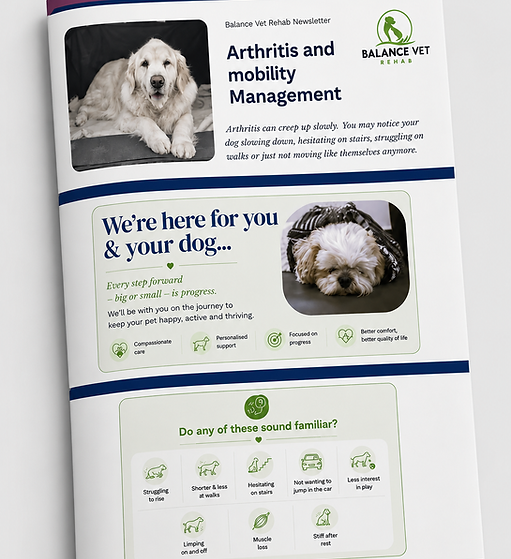
Want a clear arthritis guide you can read later?
If you’re still gathering information, you may find it helpful to read through our arthritis guide in your own time.
It covers:
• what arthritis means
• common signs to look for
• treatment and management options
• how to keep your dog comfortable and active
• what long-term care may involve
👉 Download the Arthritis Guide

How Is Arthritis Diagnosed?
Diagnosis may involve:
-
Physical examination
-
Orthopaedic assessment
-
Gait evaluation
-
Joint mobility assessment
-
Muscle evaluation
-
Imaging such as X-rays
Importantly, arthritis severity on X-rays does not always perfectly match how uncomfortable a dog feels.
Some dogs with mild imaging changes can still experience significant functional problems.

How Rehabilitation Can Help Dogs With Arthritis
Rehabilitation focuses on improving:
-
Mobility
-
Strength
-
Joint support
-
Comfort during movement
-
Confidence
Depending on the dog, rehabilitation may include:
-
Controlled exercise
-
Hydrotherapy
-
Strengthening work
-
Balance training
-
Home exercise programs
-
Mobility support strategies
The aim is not simply reducing pain temporarily — it is helping dogs move more comfortably and function more confidently long term.
Many Dogs Improve Significantly With Support
One of the most encouraging things owners discover is that many dogs become:
-
More active
-
More playful
-
More mobile
-
More confident
…once arthritis management begins.
Even when arthritis cannot be reversed completely, improving strength, comfort, and mobility can significantly improve quality of life.


Things You Can Do at Home
Helpful strategies may include:
-
Weight management
-
Non-slip flooring
-
Orthopaedic bedding
-
Controlled exercise
-
Hydrotherapy
-
Support harnesses
-
Paw grip products
Learn more about:
Still deciding whether rehabilitation may help? We’re happy to answer questions and help you explore your options.
Arthritis Often Develops Secondary to Other Conditions
Many dogs with arthritis also have underlying orthopaedic conditions such as:
-
Hip dysplasia
-
Elbow dysplasia
-
Cruciate disease
-
Luxating patella
Learn more about:
-
Hip Dysplasia in Dogs
-
Elbow Dysplasia in Dogs
-
Patella Luxation in Dogs
-
Partial Cruciate Tears in Dogs


Supporting Dogs Across Brisbane, Gold Coast & Scenic Rim
We work with dogs across Brisbane, Gold Coast, and Scenic Rim experiencing:
-
Arthritis
-
Stiffness
-
Weakness
-
Mobility decline
-
Chronic orthopaedic pain
-
Senior dog mobility changes
Every rehabilitation plan is tailored individually based on the dog’s comfort, mobility, and lifestyle needs.
Hear From Families Supporting Arthritic Dogs
Many owners initially assume their dog is simply slowing down with age. Often, arthritis and mobility decline are contributing more than expected.

Early Signs Matter
The earlier arthritis and mobility decline are recognised, the more opportunity there often is to:
-
Maintain muscle strength
-
Improve mobility
-
Reduce compensatory strain
-
Improve comfort
-
Support long-term quality of life
Many dogs cope quietly for long periods before signs become obvious.

Want Help Understanding Your Dog’s Symptoms?
Whether your dog has recently started slowing down or has shown signs of stiffness for some time, we’re happy to help you explore whether arthritis or mobility problems may be contributing.
No commitment needed — we’re happy to answer questions and help you understand your options first.