

How to Help a Dog With Arthritis at Home
Small changes at home can sometimes make a big difference to your dog’s comfort, confidence, and mobility.
Watching your dog slow down can be heartbreaking.
Many owners notice:
-
stiffness after resting
-
difficulty getting up
-
hesitation on stairs
-
slipping on floors
-
reduced enthusiasm for walks or play
The good news is that helping a dog with arthritis is often about more than medications alone.
Simple home adjustments, carefully controlled exercise, and supportive rehabilitation strategies may help many dogs stay more comfortable and active for longer.
At Balance Vet Rehab, we work with families across Brisbane, Gold Coast, and Scenic Rim to help dogs with arthritis move more comfortably and confidently both at home and during rehabilitation.
Just exploring ways to help your dog at home? We’re happy to answer questions with no obligation.
UNDERSTANDING ARTHRITIS IN DOGS
Arthritis occurs when joints become inflamed and painful over time.
This commonly leads to:
-
stiffness
-
reduced mobility
-
muscle loss
-
weakness
-
altered movement patterns
Many dogs try to hide discomfort, so the signs are often subtle initially.
Owners may notice:
-
slowing down
-
stiffness after sleeping
-
reluctance to jump
-
difficulty on slippery floors
-
tiring more easily
You may also want to read:
-
Signs of Arthritis in Dogs
-
Dog Stiff After Resting
The earlier supportive changes are introduced, the more opportunities we often have to help maintain comfort and mobility long-term.
.jpg)
WHY HOME MANAGEMENT MATTERS
Most arthritis management happens outside the clinic.
What dogs do every day:
-
how they move
-
where they sleep
-
how much exercise they get
-
how easily they navigate the house
can significantly affect their comfort and quality of life.
Small environmental changes may help reduce strain on painful joints and improve confidence moving around the home.
Combined with rehabilitation, these strategies can often help dogs continue enjoying walks, family activities, and daily life for longer.
Not every dog needs intensive therapy. Sometimes simple home changes and guidance can make a meaningful difference.


PRACTICAL WAYS TO HELP A DOG WITH ARTHRITIS AT HOME
Improve Flooring Traction
Slippery flooring is extremely difficult for many arthritic dogs.
Struggling for grip can:
-
worsen joint strain
-
reduce confidence
-
increase slipping
-
increase risk of injury
Helpful options may include:
-
rugs
-
yoga mats
-
carpet runners
-
non-slip flooring
-
grip socks (for selected dogs)
Improving traction is often one of the simplest and most effective home modifications.

Use Supportive Bedding
Dogs with arthritis often become uncomfortable lying on hard surfaces.
Supportive orthopaedic bedding may help:
-
reduce pressure on joints
-
improve sleep quality
-
reduce stiffness after resting
Beds should ideally:
-
be easy to access
-
provide cushioning
-
stay warm and dry
-
be located away from slippery areas
Keep Exercise Consistent
One of the most common mistakes is the “weekend warrior” pattern.
For example:
-
minimal exercise during the week
-
then a huge walk or beach outing on weekends
Large fluctuations in activity often trigger arthritis flare-ups.
In many cases, dogs do better with:
-
regular gentle exercise
-
shorter controlled walks
-
consistency
-
gradual progression
Movement is important — but appropriate movement is the key.
Help With Stairs & Jumping
Repeated jumping and stair climbing can aggravate painful joints in some dogs.
You may wish to consider:
-
ramps
-
steps
-
blocking furniture access
-
lifting assistance harnesses
-
avoiding repeated jumping into cars
This is especially important for dogs with:
-
Hip Dysplasia
-
Elbow Dysplasia
-
spinal arthritis
-
hind limb weakness
Avoid Complete Rest
Owners are often understandably worried about causing pain.
However, complete inactivity commonly leads to:
-
worsening stiffness
-
muscle loss
-
weakness
-
reduced mobility
Controlled movement is usually important for maintaining joint support and function.
This is where rehabilitation guidance can help determine what level of exercise is appropriate for your dog.
Maintain Healthy Body Weight
places additional stress on painful joints.
Even relatively small reductions in body weight may significantly improve:
-
comfort
-
mobility
-
endurance
-
joint loading
Weight management is often one of the most important long-term arthritis strategies.

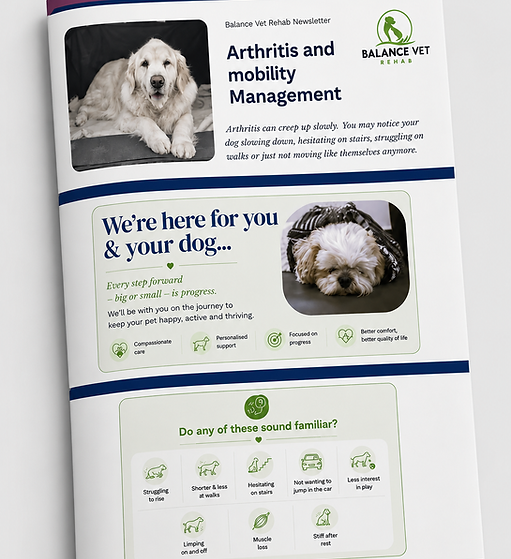.png)
Want a clear arthritis guide you can read later?
If you’re still gathering information, you may find it helpful to read through our arthritis guide in your own time.
It covers:
• what arthritis means
• common signs to look for
• treatment and management options
• how to keep your dog comfortable and active
• what long-term care may involve
👉 Download the Arthritis Guide

CONSIDER REHABILITATION SUPPORT
Home management works best when combined with an appropriate rehabilitation plan.
Depending on your dog’s needs, this may include:
Hydrotherapy
Hydrotherapy allows many arthritic dogs to exercise with reduced impact on painful joints while still building strength.
Many dogs move far more comfortably in water than on land.
Learn more about Hydrotherapy for Arthritis in Dogs.
Acupuncture
Acupuncture is sometimes used as part of multimodal arthritis management.
Some owners report improvements in:
-
comfort
-
relaxation
-
willingness to move
-
mobility
Learn more about Acupuncture.

Shockwave Therapy
Shockwave therapy may be used in selected dogs with chronic musculoskeletal pain as part of a broader rehabilitation plan.
Learn more about Shockwave Therapy.
Strengthening & Mobility Programs
Tailored rehabilitation exercises may help support:
-
muscle strength
-
joint stability
-
balance
-
mobility
-
confidence
These programs are adjusted carefully depending on the dog’s diagnosis and comfort level.
You may also want to read:


WHEN SHOULD YOU SEEK PROFESSIONAL HELP?
We generally recommend assessment if your dog:
-
struggles getting up
-
is becoming progressively stiffer
-
avoids stairs or jumping
-
slips frequently
-
has muscle loss
-
is reluctant on walks
-
seems painful after activity
-
is slowing down noticeably
Unfortunately, many dogs compensate quietly for a long time before symptoms become severe.
Earlier intervention often gives us more opportunities to support long-term mobility and quality of life.
If you’re unsure whether your dog’s changes are “normal ageing” or arthritis-related, we’re happy to help guide you.
WHAT TO EXPECT FROM A REHABILITATION CONSULTATION
At Balance Vet Rehab, we assess the whole dog — not just the sore joint.
Your dog’s consultation may include:
-
gait analysis
-
posture assessment
-
muscle condition
-
strength evaluation
-
balance assessment
-
joint mobility assessment
-
functional movement evaluation
We then discuss practical treatment and home management options tailored to your dog and family.
Some dogs benefit from:
-
occasional support sessions
-
hydrotherapy
-
home exercise plans
-
strengthening programs
-
multimodal arthritis management
There is no one-size-fits-all approach.


INTERNAL SUPPORT & RELATED PAGES
You may also find these pages helpful:
-
Hip Dysplasia
-
Elbow Dysplasia
-
Shockwave Therapy
-
Acupuncture
Hear From Families Supporting Stiff & Arthritic Dogs
Helping Dogs Stay Comfortable & Enjoy Life at Home
Many owners simply want their dog to:
-
move more comfortably
-
enjoy walks again
-
rise more easily
-
feel happier at home
-
Often, small changes combined with appropriate rehabilitation support can make a meaningful difference to daily quality of life.
Our focus is always on practical, compassionate care tailored to the individual dog and family.
Looking for Help Managing Your Dog’s Arthritis at Home?
If your dog is slowing down, stiff after resting, or struggling with mobility, rehabilitation and home management strategies may help improve comfort and confidence.
We work with dogs across Brisbane, Gold Coast, and Scenic Rim through tailored arthritis rehabilitation, hydrotherapy, strengthening, and mobility support programs.
Still exploring your options? We’re happy to answer questions first so you can decide what feels right for your dog.