
Just exploring what may be causing your dog’s stiffness? We’re happy to answer questions with no pressure or obligation.
Why Is My Dog Stiff After Resting?
Understanding Why Dogs Become Stiff After Sleeping or Lying Down
Many owners first notice something is wrong when their dog gets up after resting.
A dog who was once energetic suddenly:
-
Walks stiffly after sleep
-
Takes time to “warm up”
-
Hesitates getting up
-
Looks sore first thing in the morning
-
Struggles after lying down for a while
Often, once they start moving, they appear to loosen up again.
This pattern is extremely common in dogs with arthritis and other mobility problems.
While occasional mild stiffness can happen after unusual activity, persistent stiffness after rest is often a sign that joints, muscles, or the spine are becoming uncomfortable.
The encouraging news is that many dogs improve significantly when the underlying problem is identified and managed appropriately.
Why Do Dogs Become Stiff After Resting?
When joints are inflamed or painful, they often become stiffer during inactivity.
During rest:
Joints move less
Muscles cool down
Soft tissues tighten
Arthritic joints become less lubricated
This is why many dogs appear worst:
First thing in the morning
After long car rides
After naps
After extended inactivity
Once movement begins, joints and muscles often “warm up,” temporarily improving mobility.
This pattern is particularly common in dogs with arthritis.
Arthritis Is One of the Most Common Causes
Arthritis is by far one of the most common reasons dogs become stiff after resting.
Arthritis causes:
-
Joint inflammation
-
Cartilage degeneration
-
Reduced flexibility
-
Pain during movement
-
Muscle compensation
Many owners initially assume their dog is simply “getting old,” especially when stiffness develops gradually.
However, stiffness after rest is often one of the earliest signs of arthritis.
Learn more about:


Other Possible Causes of Stiffness After Rest
Hip Dysplasia
Dogs with hip dysplasia commonly:
-
Struggle getting up
-
Bunny hop when running
-
Sway through the hind end
-
Become stiff after inactivity
Learn more about Hip Dysplasia in Dogs
Elbow Dysplasia
Front limb stiffness after rest is common in dogs with elbow arthritis or elbow dysplasia.
Owners may notice:
-
Stiff front leg gait
-
Reduced willingness to exercise
-
Head bobbing during walking
-
Shortened stride length
Learn more about Elbow Dysplasia in Dogs
Cruciate Ligament Disease
Dogs with cruciate injuries often become stiff after rest because the knee joint becomes unstable and inflamed.
Some dogs show:
-
Mild limping after rest
-
Reduced weight bearing
-
Difficulty sitting squarely
-
Intermittent stiffness
Learn more about:
-
Cruciate Ligament Injuries in Dogs
-
Partial Cruciate Tears in Dogs
Spinal Arthritis or Neurological Problems
Not all stiffness comes directly from joints.
Some dogs become stiff due to:
-
Spinal arthritis
-
Disc disease
-
Nerve pain
-
Reduced coordination
-
Muscle guarding
These dogs may appear:
-
Weak
-
Wobbly
-
Slow turning
-
Reluctant to jump

What Does Arthritis Stiffness Usually Look Like?
Dogs with arthritis stiffness commonly:
-
Walk slowly after rising
-
Take shorter steps
-
Arch their back slightly
-
Hesitate before moving
-
Stretch repeatedly
-
Improve after several minutes
Some dogs also:
-
Slip on smooth floors
-
Struggle with stairs
-
Avoid jumping
-
Tire more easily
The signs are often subtle initially and worsen gradually over time.
Is Morning Stiffness a Bad Sign?
Morning stiffness often suggests:
-
Joint inflammation
-
Reduced flexibility
-
Chronic orthopaedic discomfort
However, it does not necessarily mean severe irreversible disease.
Many dogs with early arthritis still respond very well to:
-
Rehabilitation
-
Controlled exercise
-
Weight management
-
Hydrotherapy
-
Pain management
-
Home modifications
Early support often helps maintain mobility longer.


Should You Still Exercise a Dog That Is Stiff After Resting?
In many cases, yes.
Appropriate movement is often beneficial for arthritic dogs.
Gentle movement may help:
-
Improve circulation
-
Reduce stiffness
-
Maintain muscle strength
-
Improve joint mobility
However, exercise should be:
-
Controlled
-
Consistent
-
Low impact
-
Appropriate for the individual dog
Excessive exercise can worsen soreness.
Learn more about:
No obligation needed — we’re happy to help you understand whether rehabilitation may suit your dog.

How Rehabilitation Can Help Stiff Dogs
Veterinary rehabilitation focuses on improving:
-
Strength
-
Joint support
-
Flexibility
-
Balance
-
Comfort during movement
Depending on the dog, treatment may include:
-
Strengthening exercises
-
Hydrotherapy
-
Balance work
-
Controlled walking programs
-
Home exercise plans
-
Pain management strategies
The aim is not simply reducing pain temporarily — it is helping dogs move more comfortably and confidently long term.


Home Changes That May Help
Simple changes at home can significantly improve comfort for stiff dogs.
Helpful modifications may include:
-
Orthopaedic bedding
-
Non-slip flooring
-
Ramps
-
Support harnesses
-
Paw grip products
-
Weight management
Many dogs struggle far more on slippery surfaces than owners realise.
Learn more about:
When Should You Seek Help?
It is worth considering assessment if your dog:
-
Is consistently stiff after rest
-
Is slowing down
-
Has difficulty rising
-
Appears uncomfortable
-
Has reduced exercise tolerance
-
Is slipping frequently
-
Has muscle loss
-
Has had previous orthopaedic surgery
The earlier mobility problems are addressed, the more opportunity there often is to maintain strength and comfort long term.


Supporting Dogs Across Brisbane, Gold Coast & Scenic Rim
We work with dogs across Brisbane, Gold Coast, and Scenic Rim experiencing:
-
Arthritis
-
Mobility decline
-
Stiffness after rest
-
Weakness
-
Post-surgical soreness
-
Chronic orthopaedic pain
Every rehabilitation plan is tailored individually based on the dog’s mobility, comfort, and lifestyle needs.
Still deciding whether rehab may help? We’re happy to answer questions and help you explore your options first.
Hear From Families Supporting Stiff & Arthritic Dogs
Many owners initially assume stiffness is simply part of ageing. Often, there are supportive options that can help dogs move more comfortably again.

Stiffness After Rest Is Common — But Often Manageable
Dogs do not always show pain in obvious ways.
Sometimes stiffness after resting is the earliest clue that joints, muscles, or the spine are becoming uncomfortable.
The good news is that many dogs improve significantly when:
-
Pain is managed appropriately
-
Muscles are strengthened
-
Movement becomes safer
-
Mobility support is introduced early
.png)
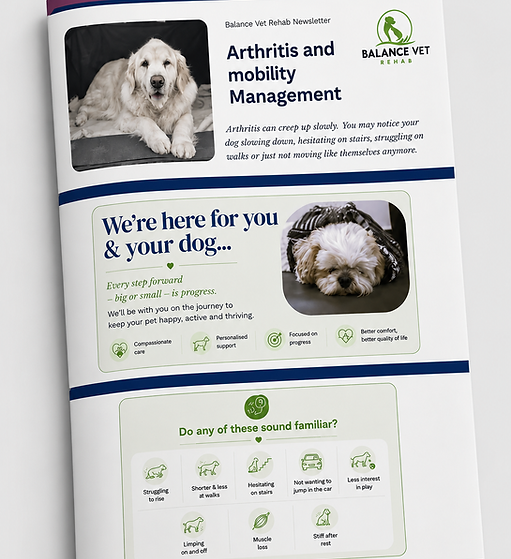
Want a clear arthritis guide you can read later?
If you’re still gathering information, you may find it helpful to read through our arthritis guide in your own time.
It covers:
• what arthritis means
• common signs to look for
• treatment and management options
• how to keep your dog comfortable and active
• what long-term care may involve
👉 Download the Arthritis Guide

Want Help Understanding Your Dog’s Stiffness?
Whether your dog has recently started slowing down or has been stiff for some time, we’re happy to help you explore whether rehabilitation may assist.
Just gathering information? No pressure — we’re happy to answer questions and help you understand your options.