

Is My Dog Slowing Down From Age or Arthritis?
Understanding the Difference Between Normal Ageing and Pain in Dogs
Many owners notice small changes gradually.
Their dog no longer rushes to the door. Walks become shorter. Stairs take longer. Jumping into the car suddenly seems difficult. They sleep more, play less, or appear “older overnight.”
It is incredibly common for families to wonder:
“Is this just ageing… or could my dog actually be in pain?”
The reality is that many dogs assumed to be “just slowing down with age” are actually struggling with arthritis, muscle weakness, or reduced mobility.
While some slowing with age is normal, pain and stiffness are not something dogs simply have to live with.
The encouraging news is that many dogs improve significantly once their discomfort and mobility issues are properly addressed.
Just exploring whether rehab may help? We’re happy to answer questions with no pressure or commitment.
Do Dogs Naturally Slow Down With Age?
Yes — some changes are a normal part of ageing.
Older dogs often:
-
Sleep more
-
Recover more slowly after exercise
-
Have slightly reduced stamina
-
Become less interested in intense activity
-
Prefer calmer routines
However, ageing alone should not cause significant pain, limping, stiffness, or difficulty performing everyday activities.
Many dogs remain active and happy well into their senior years when mobility problems are managed appropriately.
The challenge is that dogs are extremely good at hiding pain. Instead of crying or clearly limping, they often simply:
-
Move less
-
Hesitate more
-
Avoid difficult movements
-
Change their behaviour subtly
Owners often interpret these changes as “old age” when arthritis may actually be contributing significantly.
.jpg)

Common Signs Your Dog May Have Arthritis Rather Than “Just Ageing”
Stiffness After Resting
One of the earliest arthritis signs is stiffness after lying down.
Dogs may:
-
Take a few steps to “warm up”
-
Walk stiffly first thing in the morning
-
Struggle getting up from hard floors
-
Look sore after naps
Learn more about Dog Stiff After Resting
Slowing Down on Walks
Dogs with arthritis frequently:
-
Lag behind
-
Stop more often
-
Sit down during walks
-
Walk shorter distances
-
Seem reluctant to continue
This does not always mean they are “getting lazy.” Often, movement has simply become uncomfortable.
Behaviour Changes
Pain changes behaviour.
Some dogs become:
-
Quieter
-
More withdrawn
-
Irritable
-
Less playful
-
More anxious during handling
Others become restless because they cannot settle comfortably.
Behaviour changes are sometimes the first clue that chronic pain may be present.
Difficulty Jumping or Using Stairs
Many arthritic dogs begin:
-
Avoiding stairs
-
Hesitating before jumping
-
Needing assistance into the car
-
Pulling out of activities they previously enjoyed
These changes are often linked to joint pain or muscle weakness rather than simple ageing.
Muscle Loss
Arthritic dogs commonly lose muscle, especially around:
-
Hind legs
-
Hips
-
Shoulders
Muscle loss reduces joint support and can further worsen mobility.
Many owners first notice this when their dog appears “bonier” through the hips or thighs.

What Causes Arthritis in Older Dogs?
Arthritis develops when joints become inflamed and progressively degenerate over time.
Some dogs develop arthritis mainly due to age-related wear, while others develop it secondary to underlying conditions such as:
-
Hip dysplasia
-
Elbow dysplasia
-
Cruciate ligament injuries
-
Luxating patella
-
Previous injuries or surgery
-
Spinal disease
Large breeds and active dogs are often affected earlier, but arthritis can occur in dogs of any breed or size.
Learn more about:
-
Hip Dysplasia in Dogs
-
Cruciate Ligament Injuries in Dogs
-
Elbow Dysplasia in Dogs
-
Patella Luxation in Dogs
What Does Arthritis Actually Feel Like for Dogs?
Arthritis pain is often not constant severe pain.
Instead, many dogs experience:
-
Aching joints
-
Reduced flexibility
-
Muscle fatigue
-
Joint stiffness
-
Soreness after activity
-
Difficulty stabilising weak joints
This is why some days appear better than others.
Cold weather, slippery flooring, overexertion, and inactivity can all worsen symptoms temporarily.
Many owners are surprised to discover their dog has likely been compensating for discomfort for months or even years.
No obligation needed — we’re happy to help you understand whether arthritis may be contributing to your dog’s changes.


How Rehabilitation Can Help Older Dogs With Arthritis
Rehabilitation focuses on improving function, comfort, strength, and confidence.
For many older dogs, treatment is not about returning to extreme athletic performance — it is about helping them:
-
Walk more comfortably
-
Move more confidently
-
Stay active longer
-
Maintain independence
-
Enjoy family life
Rehabilitation plans may include:
-
Gentle strengthening exercises
-
Hydrotherapy
-
Balance training
-
Mobility support
-
Weight management
-
Pain management strategies
-
Home environment modifications
Importantly, rehabilitation is adapted to the individual dog’s age, temperament, fitness, and medical conditions.
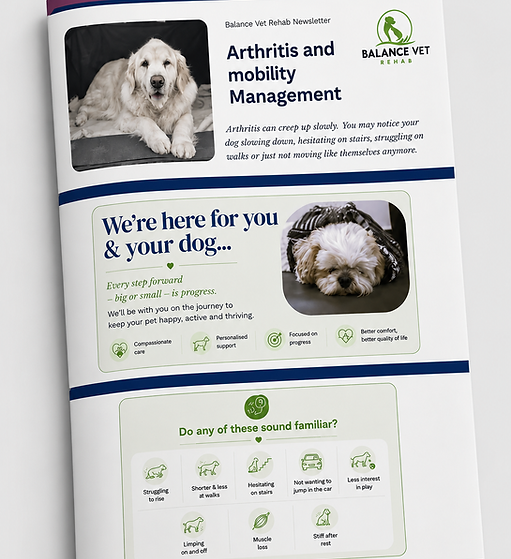.png)
Want a clear arthritis guide you can read later?
If you’re still gathering information, you may find it helpful to read through our arthritis guide in your own time.
It covers:
• what arthritis means
• common signs to look for
• treatment and management options
• how to keep your dog comfortable and active
• what long-term care may involve
👉 Download the Arthritis Guide

Many Older Dogs Improve More Than Owners Expect
One of the most rewarding parts of rehabilitation is seeing dogs rediscover confidence and enjoyment in movement.
Owners commonly report:
-
Increased energy
-
Improved walking tolerance
-
Better ability getting up
-
More enthusiasm for walks
-
Improved mood
-
Better sleep
-
Increased playfulness
Sometimes owners realise their dog had been coping with chronic pain far longer than anyone realised.
While arthritis cannot usually be “cured,” improving comfort and mobility can make a major difference to quality of life.


Is It Worth Treating Arthritis in Older Dogs?
Absolutely.
Age alone should not exclude dogs from receiving supportive treatment.
Even senior dogs can often benefit significantly from:
-
Improved mobility
-
Better pain control
-
Increased muscle support
-
Safer movement
-
Reduced slipping and falls
The goal is not forcing elderly dogs into excessive activity. Instead, it is helping them remain comfortable, engaged, and functional for as long as possible.
Things You Can Do at Home
Simple changes at home can help arthritic dogs enormously.
Helpful modifications may include:
-
Non-slip flooring
-
Orthopaedic bedding
-
Ramps
-
Raised bowls
-
Controlled exercise
-
Support harnesses
-
Paw grip products
Learn more about:


When Should You Seek Help?
It is worth considering assessment if your dog:
-
Seems stiff after resting
-
Is slowing down noticeably
-
Has stopped jumping
-
Struggles on slippery floors
-
Has difficulty with stairs
-
Has changed behaviour
-
Has become less active
-
Appears sore after walks
-
Has muscle loss
Earlier support often gives the best opportunity to maintain long-term mobility and comfort.
Supporting Older Dogs Across Brisbane, Gold Coast & Scenic Rim
We work with dogs across Brisbane, Gold Coast, and Scenic Rim experiencing:
-
Arthritis
-
Mobility decline
-
Weakness
-
Post-surgical stiffness
-
Chronic orthopaedic pain
-
Senior dog mobility changes
Every dog ages differently, and rehabilitation plans are tailored individually to help support comfort, confidence, and quality of life.

Hear From Families Supporting Older Dogs
Many owners initially worry that slowing down means “there’s nothing we can do.”
Often, there are supportive options that can help significantly.

Arthritis Treatment Often Works Best Before Mobility Declines Severely
Many dogs cope quietly for long periods before owners realise how much discomfort they were managing.
Early support may help:
-
Maintain strength
-
Reduce compensatory strain
-
Improve movement confidence
-
Slow mobility decline
-
Improve comfort during daily activities

Helping Older Dogs Stay Comfortable & Active
Getting older does not automatically mean dogs should struggle with movement, stiffness, or pain.
Many senior dogs continue enjoying walks, adventures, social interaction, and family life when mobility problems are managed appropriately.
Understanding the difference between “normal ageing” and arthritis is often the first step toward helping them feel more comfortable again.
Want to Learn More About Arthritis Rehabilitation?
Whether your dog has recently started slowing down or has been stiff for some time, we’re happy to help you explore whether rehabilitation may assist.
Still deciding? That’s perfectly okay — we’re happy to answer questions and help you understand your options first.