

Just exploring whether rehabilitation may help your dog? We’re happy to answer questions with no obligation.
Should You Walk a Dog With Arthritis?
Understanding How Movement Helps — and When It Can Hurt
One of the biggest worries owners have after their dog develops arthritis is whether walking is still safe.
Many people understandably fear that exercise may worsen joint damage or increase pain.
In reality, for most dogs with arthritis, completely stopping walks often causes more problems than continuing controlled movement.
Appropriate walking can help maintain:
-
Muscle strength
-
Joint mobility
-
Balance
-
Confidence
-
Mental wellbeing
-
Overall quality of life
The challenge is finding the right type and amount of walking for the individual dog.
Too little movement may worsen stiffness and weakness. Too much exercise can flare soreness and inflammation.
The goal is not forcing arthritic dogs to “push through pain.” It is helping them continue moving comfortably and safely.
In Most Cases, Yes — Dogs With Arthritis Should Still Walk
For many dogs, walking remains one of the best forms of low-impact exercise.
Walking helps:
-
Keep joints moving
-
Maintain muscle mass
-
Support joint stability
-
Improve circulation
-
Reduce stiffness
-
Prevent deconditioning
Dogs that become completely inactive often:
-
Lose muscle strength quickly
-
Become stiffer
-
Gain weight
-
Develop worsening mobility problems
This creates a cycle where weakness and pain gradually increase together.
Controlled walking helps interrupt that cycle.
.jpg)

How Arthritis Changes the Way Dogs Tolerate Exercise
Arthritic joints do not cope with exercise the same way healthy joints do.
Many dogs tolerate:
-
Short regular walks
…far better than:
-
Long intense outings
-
High-impact activity
-
Weekend “catch-up” exercise
Consistency is usually more important than intensity.
For example, two gentle 15-minute walks daily may be much more comfortable than one exhausting hour-long walk.
Signs Your Dog May Be Overdoing Walks
The difficult part is that dogs often continue walking even when sore.
Signs exercise may be too intense include:
-
Increased limping afterward
-
Stiffness later that evening
-
Difficulty rising the next day
-
Slowing significantly during walks
-
Reluctance to continue
-
Excessive fatigue afterward
-
Soreness lasting more than 24 hours
Often the next morning tells you more than the walk itself.
If your dog consistently appears worse after walks, the exercise plan may need adjusting.
Signs Walking Is Helping Your Dog
Appropriate walking often helps dogs:
-
Move more freely
-
Warm up more quickly
-
Maintain strength
-
Stay mentally engaged
-
Improve confidence
-
Maintain healthy body weight
Owners often notice:
-
Less stiffness after rest
-
Better endurance
-
Improved mood
-
Increased enthusiasm for daily routines
Many arthritic dogs genuinely enjoy continuing regular walks when the activity level is appropriate.
What Type of Walking Is Best for Arthritic Dogs?
Most arthritic dogs cope best with:
-
Flat surfaces
-
Predictable terrain
-
Controlled pace
-
Shorter frequent walks
-
Non-slip footing
Good surfaces may include:
-
Grass
-
Flat dirt paths
-
Even walking tracks
Surfaces that are often harder include:
-
Slippery flooring
-
Loose sand
-
Steep hills
-
Hard concrete for prolonged periods
Some dogs benefit from slower “sniff walks” that allow natural pacing without excessive strain.

Should You Walk Dogs Every Day?
For many arthritic dogs, daily gentle movement is beneficial.
Long periods of inactivity can worsen:
-
Stiffness
-
Weakness
-
Joint restriction
However, “daily movement” does not necessarily mean long walks.
Some dogs do best with:
-
Several short outings
-
Controlled leash walks
-
Gentle mobility exercises
-
Hydrotherapy sessions
The ideal plan depends on:
-
Arthritis severity
-
Fitness
-
Age
-
Weight
-
Joint involvement
-
Pain control
What About Older Dogs?
Older dogs still benefit from movement.
In fact, many senior dogs lose mobility more rapidly when activity stops completely.
Gentle walking can help older dogs maintain:
-
Muscle mass
-
Confidence
-
Coordination
-
Functional independence
Learn more about Is My Dog Slowing Down From Age or Arthritis?
No pressure — we’re happy to help you understand what level of exercise may be appropriate for your dog.


Should You Still Walk a Dog That Is Limping?
This depends on:
-
Severity of lameness
-
Cause of pain
-
Sudden versus chronic symptoms
-
Recovery stage
-
Veterinary advice
Mild chronic stiffness may improve with gentle movement.
However, sudden severe limping or worsening pain should not simply be “walked off.”
If your dog has:
-
Acute worsening lameness
-
Sudden non-weight bearing
-
Severe pain
-
Neurological weakness
…they should be assessed promptly.
.png)
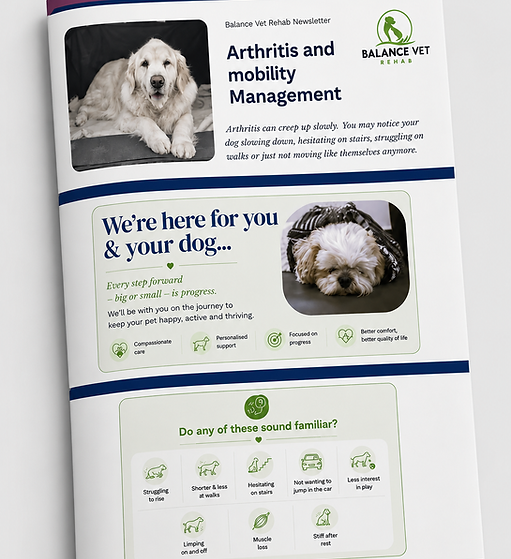
Want a clear arthritis guide you can read later?
If you’re still gathering information, you may find it helpful to read through our arthritis guide in your own time.
It covers:
• what arthritis means
• common signs to look for
• treatment and management options
• how to keep your dog comfortable and active
• what long-term care may involve
👉 Download the Arthritis Guide

Other Exercises That May Help Arthritic Dogs
Walking is often only one part of arthritis management.
Rehabilitation programs may also include:
-
Strengthening exercises
-
Hydrotherapy
-
Balance training
-
Core stability work
-
Controlled incline walking
Learn more about:

Is Running Good for Dogs With Arthritis?
Some dogs with mild arthritis continue tolerating controlled running well.
However, repetitive high-impact activity often becomes difficult as arthritis progresses.
Activities that commonly aggravate arthritic joints include:
-
Ball chasing
-
Sudden twisting
-
Repetitive jumping
-
Sprinting on slippery surfaces
-
Intense fetch sessions
This does not mean dogs must stop having fun — but activities may need modification.

Arthritis Often Involves More Than One Joint
Many dogs compensate heavily when arthritic.
For example:
-
Hip arthritis may overload knees
-
Elbow arthritis may strain shoulders
-
Spinal arthritis may affect hind limb coordination
This is why exercise plans should consider the entire body.
Learn more about:
-
Hip Dysplasia in Dogs
-
Elbow Dysplasia in Dogs
-
Cruciate Ligament Injuries in Dogs
-
Patella Luxation in Dogs


Home Support Can Make Walking Easier
Simple home changes often improve walking comfort significantly.
Helpful strategies may include:
-
Non-slip flooring
-
Support harnesses
-
Paw grip products
-
Ramps
-
Weight management
-
Orthopaedic bedding
Learn more about:
Still deciding whether rehabilitation may help? We’re happy to answer questions and help you explore options.
Supporting Arthritic Dogs Across Brisbane, Gold Coast & Scenic Rim
We help dogs across Brisbane, Gold Coast, and Scenic Rim experiencing:
-
Arthritis
-
Stiffness
-
Weakness
-
Mobility decline
-
Post-surgical arthritis
-
Reduced exercise tolerance
Every rehabilitation plan is tailored individually based on the dog’s comfort, mobility, and lifestyle goals.

Hear From Families Supporting Arthritic Dogs
Many owners worry that walking will worsen arthritis. Often, controlled movement is one of the most important parts of maintaining mobility and quality of life.

The Goal Is Safe, Sustainable Movement
Most dogs with arthritis benefit from continuing to walk — but the exercise must match their abilities and comfort level.
The best walking plan is usually:
-
Consistent
-
Controlled
-
Low impact
-
Individualised
-
Sustainable long term
Helping dogs move comfortably often helps them stay happier, stronger, and more engaged in daily life.

Helping Dogs Stay Active & Comfortable
Arthritis does not automatically mean dogs should stop enjoying walks.
With the right support and exercise balance, many dogs continue enjoying:
-
Daily walks
-
Outdoor adventures
-
Family outings
-
Comfortable movement for years
Understanding how to exercise arthritic dogs appropriately can make a major difference to comfort and quality of life.
Want Help Building a Safe Exercise Plan for Your Dog?
Whether your dog has recently been diagnosed with arthritis or has been struggling with mobility for some time, we’re happy to help you explore safe rehabilitation and walking strategies.
Just exploring your options? No commitment needed — we’re happy to help answer questions first.