

Mobility Aids for Dogs With Arthritis
Helping Arthritic Dogs Move More Comfortably & Confidently
For many dogs with arthritis, everyday activities gradually become harder.
Simple things like:
-
Standing up
-
Walking on slippery floors
-
Using stairs
-
Getting into the car
-
Going for walks
-
Squatting to toilet
…can become physically demanding when joints are painful or weak.
Mobility aids are not about “giving up” on movement.
In many cases, the right support actually helps dogs:
-
Stay more active
-
Maintain confidence
-
Reduce slipping and falls
-
Move with less strain
-
Stay independent longer
Often, small changes at home can make a surprisingly large difference to comfort and quality of life.
Just exploring your options? We’re happy to help you understand what may suit your dog — no commitment needed.
Why Arthritic Dogs Often Struggle With Mobility
Arthritis affects more than just a painful joint.
Over time, dogs may also develop:
-
Muscle weakness
-
Reduced balance
-
Joint instability
-
Slower reflexes
-
Difficulty gripping slippery surfaces
-
Reduced confidence during movement
Many dogs begin compensating by shifting weight awkwardly or avoiding difficult movements altogether.
This can gradually lead to:
-
More muscle loss
-
Reduced activity
-
Increased stiffness
-
Greater fall risk
Mobility aids help reduce these secondary problems while supporting safer movement.

Support Harnesses for Dogs With Arthritis
Support harnesses are one of the most useful mobility aids for many arthritic dogs.
They allow owners to assist dogs during:
-
Standing up
-
Walking
-
Stairs
-
Car transfers
-
Toileting support
-
Rehabilitation exercises
Importantly, harnesses help provide support without placing strain on the neck.
Help ’Em Up Harnesses
We commonly recommend and supply Help ’Em Up Harnesses for dogs needing additional mobility support.
These harnesses are designed to:
-
Assist both front and hind limbs
-
Improve lifting safety
-
Reduce strain on owners
-
Improve stability during walking
-
Help dogs maintain confidence
They can be especially helpful for:
-
Older dogs
-
Large breed dogs
-
Dogs with hip arthritis
-
Dogs recovering from surgery
-
Dogs with weakness or instability
Many owners find that dogs become more willing to move once they feel physically supported.


Paw Grip Products & Non-Slip Support
Slipping is a major issue for many arthritic dogs.
When dogs repeatedly lose traction, they often:
-
Become less confident
-
Avoid walking on smooth floors
-
Overload joints while trying to stabilise
-
Experience worsening soreness
Show Tech+ Paw Grip
We commonly recommend and supply Show Tech+ Paw Grip products to improve traction on slippery surfaces.
These products may help dogs:
-
Walk more confidently indoors
-
Reduce slipping
-
Improve stability
-
Maintain mobility at home
Traction support is often particularly useful for:
-
Senior dogs
-
Dogs with hind limb weakness
-
Dogs with neurological conditions
-
Dogs with hip or knee arthritis
No pressure — we’re happy to discuss whether mobility aids may help your dog feel more comfortable at home.


Ramps for Arthritic Dogs
Jumping into cars or climbing stairs can place significant stress on painful joints.
Ramps may help reduce strain during:
-
Car access
-
Furniture access
-
Steps around the home
Ramps are often preferable to repeated jumping for dogs with:
-
Hip arthritis
-
Elbow arthritis
-
Cruciate disease
-
Spinal arthritis
-
Muscle weakness
The best ramps are:
-
Stable
-
Non-slip
-
Wide enough for confident footing
-
Gradual in incline
Some dogs require gradual training before becoming comfortable using them.

Orthopaedic Bedding
Comfortable supportive bedding can help reduce pressure on painful joints.
Many arthritic dogs struggle more after resting on:
-
Hard floors
-
Thin bedding
-
Cold surfaces
Orthopaedic bedding may help:
-
Reduce pressure points
-
Improve comfort
-
Improve sleep quality
-
Reduce morning stiffness
This can be especially valuable for older dogs with multiple arthritic joints.
Flooring Changes Can Make a Huge Difference
Slippery floors are one of the biggest challenges for many arthritic dogs.
Common difficult surfaces include:
-
Tiles
-
Polished timber
-
Hybrid flooring
Dogs may begin:
-
Splaying their legs
-
Falling
-
Avoiding certain rooms
-
Losing confidence indoors
Simple changes may include:
-
Runners or rugs
-
Yoga mats
-
Carpet paths
-
Paw grip products
Improving traction often improves mobility immediately.


Mobility Aids Work Best Alongside Rehabilitation
Mobility aids help support movement, but they work best when combined with strategies that improve underlying function.
Rehabilitation may help:
-
Improve strength
-
Improve balance
-
Maintain muscle mass
-
Improve confidence
-
Reduce compensatory strain
Many dogs benefit from combining:
-
Support harnesses
-
Controlled exercise
-
Hydrotherapy
-
Strengthening exercises
-
Pain management
-
Environmental modifications
Learn more about:
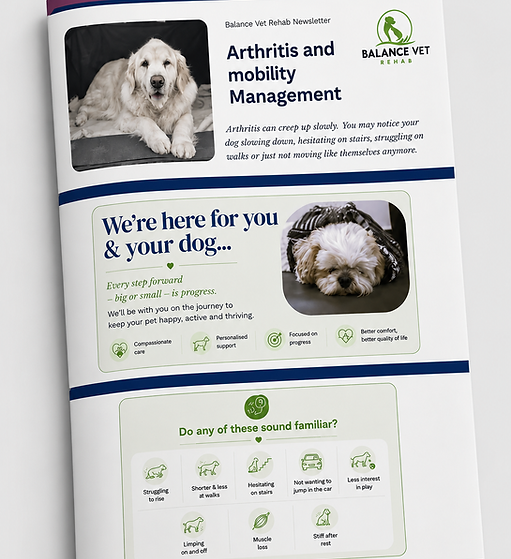.png)
Want a clear arthritis guide you can read later?
If you’re still gathering information, you may find it helpful to read through our arthritis guide in your own time.
It covers:
• what arthritis means
• common signs to look for
• treatment and management options
• how to keep your dog comfortable and active
• what long-term care may involve
👉 Download the Arthritis Guide

Helping Dogs Stay Independent Longer
One of the biggest emotional challenges for owners is watching their dog lose confidence or independence.
Many dogs become frustrated when:
-
They cannot stand easily
-
They slip repeatedly
-
They struggle on walks
-
They need help with stairs
Appropriate mobility aids often allow dogs to:
-
Continue participating in family life
-
Stay active longer
-
Move more comfortably
-
Maintain confidence
Sometimes relatively small changes dramatically improve day-to-day function.


What Mobility Aid Is Best for My Dog?
The best mobility aid depends on:
-
Which joints are affected
-
Arthritis severity
-
Body size
-
Strength
-
Balance
-
Confidence
-
Home environment
For example:
-
A large Labrador with hip arthritis may benefit most from a support harness.
-
A small dog slipping indoors may benefit primarily from traction support.
-
A weak senior dog may need a combination of harness support and home modifications.
This is why assessment and individual planning are important.
Still deciding what your dog may need? We’re happy to help you understand the options first.
Arthritis Often Involves More Than One Problem
Many dogs with arthritis also have:
-
Muscle loss
-
Weakness
-
Balance deficits
-
Neurological changes
-
Previous orthopaedic injuries
Learn more about:
-
Hip Dysplasia in Dogs
-
Cruciate Ligament Injuries in Dogs
-
Elbow Dysplasia in Dogs
-
Patella Luxation in Dogs


Supporting Dogs Across Brisbane, Gold Coast & Scenic Rim
We work with dogs across Brisbane, Gold Coast, and Scenic Rim experiencing:
-
Arthritis
-
Mobility decline
-
Weakness
-
Slipping indoors
-
Post-surgical mobility challenges
-
Senior dog support needs
Mobility support plans are tailored individually based on each dog’s comfort, confidence, and daily lifestyle needs.
Hear From Families Supporting Arthritic Dogs
Many owners are surprised how much difference small mobility changes can make to their dog’s comfort and confidence.

Small Changes Can Make Everyday Life Easier
Mobility aids are not about restricting dogs.
Often, they help dogs continue doing the things they enjoy more safely and comfortably.
For many arthritic dogs, improving:
-
Stability
-
Confidence
-
Traction
-
Support
…can significantly improve quality of life.
Helping Dogs Stay Comfortable, Safe & Mobile
Arthritis can gradually affect confidence as well as physical movement.
The right combination of:
-
Rehabilitation
-
Home modifications
-
Support harnesses
-
Traction aids
-
Controlled exercise
…can help many dogs remain active and engaged for much longer than owners expect.

Want Help Choosing Mobility Support for Your Dog?
Whether your dog has recently started struggling with movement or has had arthritis for some time, we’re happy to help you explore appropriate mobility aids and rehabilitation support.
No commitment needed — we’re happy to answer questions and help you understand your options.