

Just gathering information first? That’s completely okay — we’re happy to answer questions with no pressure to book.
Veterinary Shockwave Therapy for Dogs in Brisbane
When your dog is still limping, slowing down, struggling with exercise, or not recovering the way you hoped, it can be difficult knowing what the next step should be. Shockwave therapy is a non-surgical treatment used in veterinary rehabilitation to help stimulate healing, reduce pain, and improve comfort and mobility in some musculoskeletal conditions.
At Balance Vet Rehab, we use veterinary shockwave therapy as part of a comprehensive rehabilitation approach tailored to your dog’s condition, lifestyle, and goals.
We regularly see dogs from Brisbane, the Gold Coast, and Scenic Rim for rehabilitation support involving arthritis, tendon injuries, chronic pain, post-operative recovery, and performance-related injuries.
What Is Shockwave Therapy for Dogs?
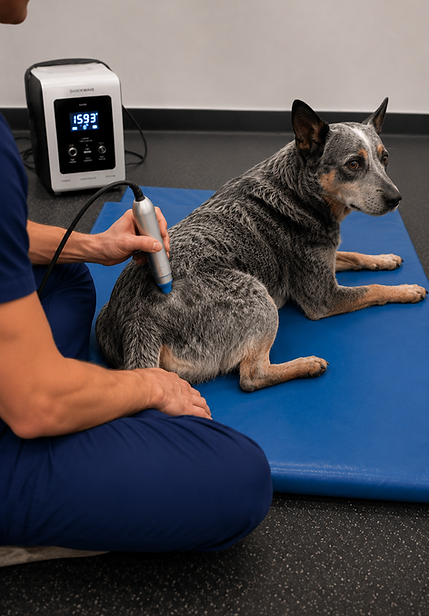
Shockwave therapy is a treatment that uses controlled acoustic waves (sound energy) delivered through the skin into injured or painful tissue. In veterinary rehabilitation, it is commonly used to help stimulate healing responses in tendons, ligaments, muscles, and joints.
Despite the name, it does not involve electrical shocks.
The treatment is non-invasive, meaning there is no surgery involved. Many dogs tolerate it very well, particularly when used carefully as part of a broader rehabilitation plan.
Shockwave therapy is commonly used in dogs experiencing:
-
Chronic tendon injuries
-
Muscle tightness or strain
-
Arthritis-related pain
-
Reduced mobility
-
Delayed healing
-
Sporting or working dog injuries
-
Certain post-operative rehabilitation cases
At Balance Vet Rehab, shockwave therapy is not used as a “quick fix.” Instead, it is incorporated into a full rehabilitation strategy that may also include strengthening exercises, hydrotherapy, mobility work, pain management, and home exercise planning.


Not sure whether your dog is suitable for shockwave therapy? We’re happy to talk through your pet’s situation before you decide anything.
How Shockwave Therapy May Help Dogs
Shockwave therapy is thought to help by stimulating local biological responses within injured tissue. While every dog responds differently, the goals of treatment often include:
-
Reducing pain sensitivity
-
Improving local circulation
-
Stimulating tissue healing
-
Supporting tendon and ligament repair
-
Improving comfort during movement
-
Helping dogs return to activity more comfortably
For many owners, the biggest changes they notice are small but meaningful:
-
Their dog getting up more easily
-
Returning to longer walks
-
Moving more freely
-
Being more willing to play
-
Looking brighter and more comfortable at home
-
Because rehabilitation is highly individual, outcomes vary depending on the underlying condition, duration of injury, age, overall fitness, and concurrent arthritis or neurological issues.

Conditions Commonly Treated with Shockwave Therapy
Shockwave Therapy for Tendon Injuries in Dogs
Tendon injuries can be frustrating because they often heal slowly.
We commonly see dogs with chronic tendon strain or degeneration affecting areas such as:
-
Supraspinatus tendon
-
Biceps tendon
-
Achilles tendon
-
Patellar tendon
These injuries may cause intermittent limping, stiffness after exercise, reluctance to jump, or reduced performance in active dogs.
Shockwave therapy is often used alongside controlled strengthening and rehabilitation exercises to support tendon healing.
Learn more about supraspinatus tendon injuries in dogs and forelimb lameness rehabilitation.
Shockwave Therapy for Arthritis in Dogs
Arthritis is one of the most common reasons owners seek rehabilitation care.
While arthritis cannot be reversed, many dogs can still experience meaningful improvements in comfort and mobility with the right management approach.
Shockwave therapy may help some arthritic dogs by:
-
Reducing pain
-
Improving movement comfort
-
Supporting muscle function
-
Helping dogs participate more comfortably in exercise therapy
This is especially important because maintaining muscle strength and movement is a major part of long-term arthritis management.
Learn more about arthritis treatment for dogs and hydrotherapy for arthritic dogs.


Shockwave Therapy After Orthopaedic Surgery
Some dogs benefit from shockwave therapy during post-operative rehabilitation, particularly if progress has plateaued or there are ongoing compensatory issues.
We may consider rehabilitation support following procedures such as:
-
TPLO surgery
-
Cruciate ligament surgery
-
Patella surgery
-
Shoulder surgery
-
Fracture repair
-
Every surgical patient is different, and treatment timing matters.
Rehabilitation plans are coordinated carefully around healing stages and veterinary recommendations.

Signs Your Dog May Benefit From Rehabilitation Assessment
Many dogs referred for shockwave therapy are already showing signs that something is not quite right, including:
-
Limping that comes and goes
-
Stiffness after rest
-
Difficulty jumping into the car
-
Slowing down on walks
-
Reduced endurance
-
Reluctance to exercise
-
Muscle loss
-
Ongoing soreness despite medication
-
Performance decline in active dogs
-
Persistent issues after surgery
Sometimes these signs appear gradually, making them easy to dismiss as “just getting older.” In reality, many dogs are adapting to discomfort long before symptoms become severe.
A rehabilitation assessment helps determine:
-
What structures may be involved
-
Whether shockwave therapy is appropriate
-
What other treatments may help
-
How to improve strength and movement safely


What Happens During a Shockwave Therapy Appointment?
At Balance Vet Rehab, treatment begins with understanding the whole dog — not just the painful area.
Initial rehabilitation consultations typically take around 1–1.5 hours and may include:
-
Detailed history-taking
-
Review of X-rays or previous diagnostics
-
Full-body movement and musculoskeletal assessment
-
Strength and mobility evaluation
-
Rehabilitation treatment session
-
Home exercise planning
-
Discussion of realistic expectations and goals
Shockwave therapy itself is usually only one component of the appointment.
Some dogs require clipping of fur over the treatment area to improve contact.
Most tolerate treatment well, though sensitivity can vary depending on the condition being treated.
You don’t need to commit to treatment straight away — we can help you understand whether rehabilitation is likely to be useful first.
Is Shockwave Therapy Safe for Dogs?
When used appropriately by trained veterinary professionals, shockwave therapy is generally considered a safe rehabilitation modality.
However, not every dog or every condition is suitable.
Treatment decisions depend on:
-
Diagnosis
-
Tissue involved
-
Stage of healing
-
Overall health
-
Concurrent conditions
-
Comfort levels
-
Imaging findings where relevant
This is why assessment matters.
At Balance Vet Rehab, shockwave therapy is integrated thoughtfully within a broader rehabilitation plan rather than used as a standalone “miracle treatment.”


How Many Shockwave Sessions Does a Dog Need?
The number of sessions varies depending on:
-
The condition being treated
-
How chronic the issue is
-
Severity of tissue change
-
Your dog’s activity level
-
Concurrent rehabilitation therapies
Some dogs improve relatively quickly, while others require longer-term management and strengthening.
In many cases, rehabilitation success comes not from one single treatment, but from combining:
-
Pain management
-
Muscle strengthening
-
Mobility work
-
Weight management
-
Controlled exercise
-
Owner education
-
Ongoing monitoring
Veterinary Rehabilitation Across Brisbane, Gold Coast & Scenic Rim
Balance Vet Rehab sees dogs from across:
-
Brisbane
-
Gold Coast
-
Scenic Rim
-
Tamborine Mountain
-
Logan
-
Northern Gold Coast
-
Western Brisbane surrounds
Many owners travel to us because they are looking for a more comprehensive rehabilitation-focused approach to mobility, pain, recovery, and quality of life.
Learn more about:
-
Canine rehabilitation assessments
-
Hydrotherapy for dogs
-
Dog arthritis treatment
-
Post-surgical rehabilitation for dogs
Dog limping and mobility problems
Real Owners. Real Rehabilitation Journeys.
Choosing rehabilitation can feel overwhelming when your dog is already struggling. Many owners come to us unsure whether therapy will genuinely help — especially if they’ve already tried medications, rest, or surgery.
Our focus is always on realistic, compassionate care centred around improving comfort, movement, and quality of life.
FAQ about Dog Shockwave Therapy
Helping Dogs Move More Comfortably Again
If your dog is struggling with mobility, recovering slowly, or simply not moving like they used to, rehabilitation may help improve comfort, strength, and confidence.
We’re happy to discuss whether a rehabilitation assessment and shockwave therapy may be appropriate for your dog.

Still Exploring Your Options?
Whether you’re early in your research or already considering rehabilitation, we’re happy to answer questions about treatment options, suitability, pricing, and appointment availability.
Just exploring what might help your dog? No obligation at all — we’re here to help you make an informed decision.