
Hydrotherapy for Dogs in Brisbane, Gold Coast & Scenic Rim
Helping dogs move more comfortably, rebuild strength, and regain confidence through carefully guided canine hydrotherapy.
For many dogs, movement becomes difficult long before owners realise how much discomfort they are hiding. Some slow down gradually. Others suddenly struggle after surgery, injury, arthritis, or neurological disease. Hydrotherapy can often help bridge the gap between pain and movement by allowing dogs to exercise in a safer, lower-impact environment.
At Balance Vet Rehab, we provide veterinary-supervised hydrotherapy for dogs across Brisbane, the Gold Coast, and Scenic Rim. Our programs are tailored to each individual dog — whether they are recovering from surgery, managing arthritis, rebuilding strength after IVDD, or simply finding it harder to move comfortably as they age.
Hydrotherapy is not just “swimming.” When used appropriately, it becomes a structured rehabilitation tool designed to improve mobility, muscle strength, joint comfort, coordination, fitness, and confidence.
Just gathering information? We’re always happy to answer questions with no pressure or obligation.
What Is Hydrotherapy for Dogs?
Hydrotherapy is a form of rehabilitation that uses water to support controlled exercise. The buoyancy of water reduces pressure on painful joints while still allowing muscles to work. This creates a unique environment where dogs can often move more comfortably than they can on land.
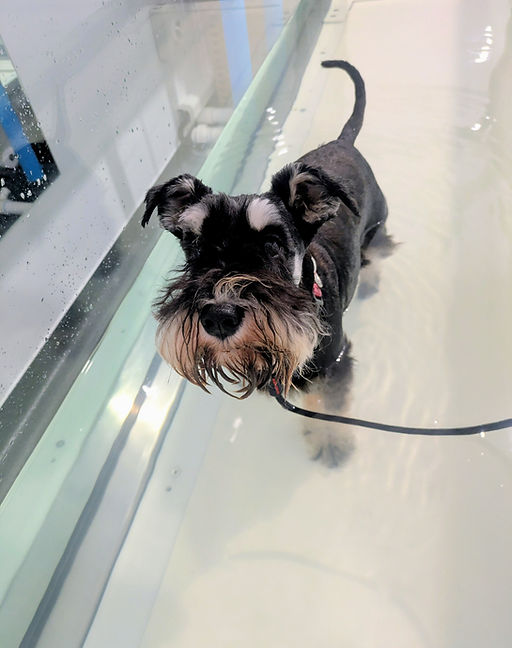
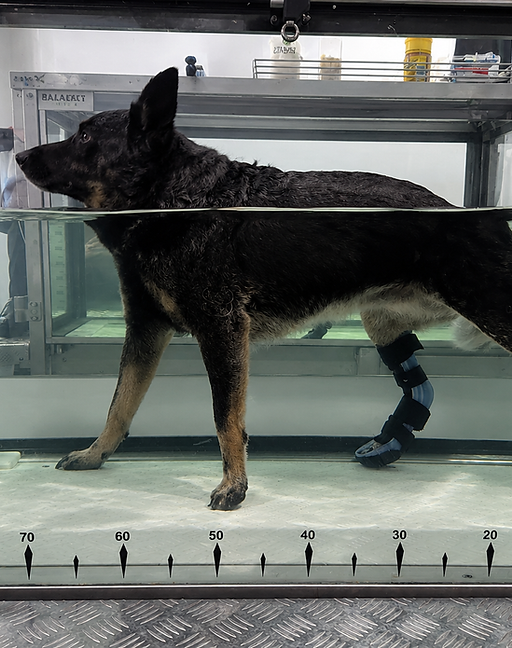
The most common form of canine hydrotherapy is an underwater treadmill, where a dog walks inside a water-filled chamber while closely supervised by a rehabilitation therapist.
The water level, treadmill speed, session duration, and exercise intensity can all be adjusted depending on the dog’s condition and goals.
Hydrotherapy may help dogs with:
Arthritis
Hip dysplasia
Cruciate ligament injuries
Elbow dysplasia
IVDD recovery
Weight management
Recovery after TPLO surgery
Neurological weakness
Muscle loss
General mobility decline in older dogs

Unlike uncontrolled exercise, hydrotherapy allows movement to be carefully monitored and progressed safely.

Not sure whether hydrotherapy is appropriate for your dog? We’re happy to talk through your options.
Why Water Helps Dogs Move More Comfortably
Water changes the way the body moves.
When a dog is immersed in water, buoyancy partially supports their body weight. This means painful joints and weak limbs experience less loading during movement. Many dogs who struggle walking on land can suddenly walk more comfortably in water.
Water also provides natural resistance. This helps muscles strengthen without the higher-impact forces associated with running or jumping.
Hydrotherapy can therefore help achieve several goals simultaneously:
-
Reduce joint stress
-
Encourage better limb use
-
Improve muscle strength
-
Build cardiovascular fitness
-
Improve coordination and balance
-
Increase confidence with movement
-
Support weight loss programs
For many owners, one of the most rewarding parts of hydrotherapy is simply seeing their dog move more freely again.
Conditions Commonly Treated With Canine Hydrotherapy
Hydrotherapy for Arthritis in Dogs
Arthritis is one of the most common reasons dogs are referred for hydrotherapy. Arthritic joints become inflamed and painful, causing stiffness, reduced activity, muscle loss, and difficulty rising or walking.
Hydrotherapy allows arthritic dogs to exercise with less joint compression while still maintaining muscle strength and mobility.
Many owners notice improvements in:
-
Stiffness after rest
-
Walking endurance
-
Confidence on walks
-
Ability to rise from lying down
-
Overall comfort levels
Hydrotherapy After TPLO Surgery
After cruciate ligament surgery such as TPLO, rebuilding muscle strength and restoring limb use is extremely important.
Dogs often compensate heavily after surgery, even when healing is progressing well. Hydrotherapy can assist with:
-
Controlled strengthening
-
Improving gait patterns
-
Encouraging consistent limb use
-
Rebuilding hindlimb muscle mass
-
Improving fitness during recovery
Timing matters after surgery, and hydrotherapy should only begin once healing is appropriate and incisions are fully healed.
Hydrotherapy for IVDD & Neurological Conditions
Dogs recovering from IVDD (Intervertebral Disc Disease) or other neurological conditions often struggle with weakness, poor coordination, and reduced awareness of limb placement.
Water can help support movement while reducing the fear and instability many neurological dogs experience on land.
Hydrotherapy may help improve:
-
Coordination
-
Muscle activation
-
Endurance
-
Confidence
-
Weight-bearing ability
Each neurological patient is different, and programs need to be tailored carefully depending on severity and stage of recovery.
Hydrotherapy for Hip Dysplasia
Dogs with hip dysplasia often struggle with weakness, stiffness, altered gait patterns, and discomfort during exercise.
Hydrotherapy provides an opportunity to strengthen muscles around the hips while minimising impact forces.
This can be particularly valuable for:
-
Young dogs with early hip dysplasia
-
Dogs managed conservatively without surgery
-
Dogs recovering from hip surgery
-
Older dogs developing arthritis secondary to hip dysplasia
-

Is Hydrotherapy the Same as Swimming?
Not necessarily.
While swimming can sometimes be useful, structured hydrotherapy is very different from simply letting a dog swim.
Swimming may not be appropriate for all dogs, especially:
Dogs with severe arthritis
Certain neurological patients
Dogs recovering from surgery
Dogs with poor stamina or panic in water
An underwater treadmill allows movement to be:
Controlled
Monitored
Gradually progressed
Adjusted for safety and comfort
This makes it more predictable and often safer for many rehabilitation patients.
Even if you’re early in your research, we’re happy to help you understand whether hydrotherapy may suit your dog.
What Happens During a Hydrotherapy Session?
Every hydrotherapy plan begins with a veterinary rehabilitation assessment.
This allows us to understand:
-
Your dog’s diagnosis
-
Current strength and mobility
-
Pain levels
-
Muscle condition
-
Balance and coordination
-
Fitness levels
-
Goals for rehabilitation
-
The hydrotherapy session itself is then tailored specifically to your dog.
A typical session may involve:
-
Controlled underwater treadmill walking
-
Gradual speed progression
-
Water level adjustments
-
Gait assessment
-
Strength exercises
-
Rest breaks
-
Home exercise recommendations
Some dogs build confidence immediately. Others need time and gradual exposure. Sessions are adjusted to suit the individual dog rather than forcing a “one size fits all” approach.
Signs Your Dog May Benefit From Hydrotherapy
Many owners wait longer than they need to before exploring rehabilitation.
Some common signs that a dog may benefit from hydrotherapy include:
Slowing down on walks
Muscle loss
Weakness after surgery
Stiffness after rest
Neurological wobbliness
Difficulty rising
Limping
Poor endurance
Reduced confidence with movement
reduced
Sometimes these changes happen gradually enough that they become “normalised” at home.
Earlier intervention can often help preserve strength and mobility more effectively.

Can Older Dogs Do Hydrotherapy?
Yes — many hydrotherapy patients are senior dogs.
Older dogs commonly benefit because hydrotherapy allows exercise with reduced impact on painful joints. Maintaining muscle mass becomes increasingly important as dogs age, particularly when arthritis or weakness begins reducing activity levels.
Sessions are adjusted carefully for older dogs based on:
-
Fitness
-
Comfort
-
Cardiovascular health
-
Arthritis severity
-
Confidence in water
The goal is not exhausting exercise. The goal is safe, comfortable movement.


Is Hydrotherapy Safe for Dogs?
When appropriately supervised, hydrotherapy is generally very safe.
However, it is not appropriate for every dog or every stage of recovery.
Some dogs may require caution or temporary postponement if they have:
-
Unhealed surgical incisions
-
Active infections
-
Certain cardiac conditions
-
Severe respiratory disease
-
Uncontrolled pain
-
Significant anxiety around water
This is why veterinary assessment and tailored planning are important.
At Balance Vet Rehab, hydrotherapy forms part of a broader rehabilitation approach rather than being used in isolation.
Rehabilitation Often Works Best as a Combined Approach
Hydrotherapy is often only one component of rehabilitation.
Depending on your dog’s condition, their plan may also involve:
Strength exercises
Mobility work
Balance training
Weight management
Pain management support
Severe distress
Home exercise programs
Manual therapy
Return-to-function planning
Different conditions require different strategies.


Helping Dogs Across Brisbane, Gold Coast & Scenic Rim
Balance Vet Rehab supports dogs from throughout:
-
Brisbane
-
Gold Coast
-
Scenic Rim
-
Tamborine Mountain
-
Logan
-
Ipswich
-
Northern Gold Coast regions
Many families travel to us because they are looking for a more structured rehabilitation approach focused on improving comfort, mobility, and quality of life.
What Owners Often Tell Us
Many owners come to hydrotherapy feeling uncertain about what rehabilitation can realistically achieve.
Some are hoping their dog can:
✅Walk more comfortably ✅Rebuild strength after surgery
✅Stay mobile longer ✅Return to walks
✅Improve confidence ✅Maintain quality of life
While every dog responds differently, even small improvements in comfort and function can make a meaningful difference to daily life.
Frequently Asked Questions About Dog Hyd
Supporting Better Movement & Comfort for Dogs
Whether your dog is recovering from surgery, struggling with arthritis, dealing with neurological weakness, or simply slowing down with age, hydrotherapy may help support safer and more comfortable movement.
Our goal is always to create practical, realistic rehabilitation plans tailored to the individual dog and family.
