

Canine Rehabilitation for Dogs on the Gold Coast & Brisbane
When your dog is struggling to walk comfortably, slowing down, recovering from surgery, or simply not moving like they used to, it can be difficult knowing what to do next.
Canine rehabilitation is designed to help improve comfort, mobility, strength, confidence, and quality of life in dogs affected by injury, arthritis, neurological disease, surgery, or chronic pain.
At Balance Vet Rehab, we take a comprehensive rehabilitation approach tailored to the individual dog — combining detailed assessment, rehabilitation therapy, movement analysis, strengthening, and long-term support strategies.
We regularly help dogs from Brisbane, the Gold Coast, and Scenic Rim with conditions ranging from arthritis and cruciate injuries through to neurological rehabilitation and complex mobility problems.
Just researching your options? We’re happy to answer questions without any pressure to book.
What Is Canine Rehabilitation?
Canine rehabilitation is the veterinary equivalent of physical rehabilitation or physiotherapy in people.
It focuses on helping dogs:
-
Move more comfortably
-
Improve strength and stability
-
Recover after surgery or injury
-
Maintain mobility as they age
-
Improve function and confidence
-
Reduce the impact of pain and compensation
Rehabilitation is not just for elite sporting dogs or major surgical cases.
Many everyday family pets benefit from rehabilitation support because they are:
-
Slowing down
-
Stiff after resting
-
Limping intermittently
-
Recovering slowly
-
Losing muscle
-
Struggling with stairs or jumping
-
Showing reduced confidence during movement

At Balance Vet Rehab, rehabilitation plans are highly individualised. The goal is never simply to “exercise” a dog — it is to understand how that dog’s body is functioning and help them move more effectively and comfortably.

How Canine Rehabilitation Helps Dogs
Dogs are incredibly good at adapting to discomfort.
Many continue functioning despite pain by shifting weight, changing posture, tightening muscles, or avoiding certain movements. Over time, these compensation patterns can contribute to worsening mobility and secondary strain elsewhere in the body.
Rehabilitation aims to address not just symptoms, but also:
-
Strength deficits
-
Reduced mobility
-
Compensation patterns
-
Muscle loss
-
Poor movement mechanics
-
Reduced balance and coordination
Depending on the condition, rehabilitation may help dogs:
-
Walk more comfortably
-
Improve endurance
-
Recover function after surgery
-
Maintain muscle mass
-
Improve balance and confidence
-
Reduce stiffness
-
Return more safely to activity
Owners often notice meaningful improvements in everyday life:
-
Easier rising from rest
-
More enthusiasm for walks
-
Improved posture
-
Better weight-bearing
-
Increased confidence on slippery floors
More willingness to play or interact

Conditions Commonly Treated With Canine Rehabilitation
Arthritis and Mobility Decline
Arthritis is one of the most common reasons dogs are referred for rehabilitation.
Many arthritic dogs experience:
-
Stiffness after resting
-
Difficulty getting up
-
Reduced endurance
-
Reluctance to jump
-
Muscle loss
-
Slowing down on walks
While arthritis cannot be reversed, rehabilitation can often help dogs remain more comfortable and functional for longer.
Management may include:
-
Strengthening exercises
-
Hydrotherapy
-
Weight management
-
Mobility work
-
Pain management strategies
-
Environmental modification
Learn more about arthritis treatment for dogs and hydrotherapy for arthritic dogs.
Post-Surgical Rehabilitation
Many dogs benefit significantly from rehabilitation after surgery.
This may include recovery following:
-
TPLO surgery
-
Cruciate ligament surgery
-
Patella luxation surgery
-
Spinal surgery
-
Fracture repair
-
Orthopaedic procedures
Even when surgery itself is successful, dogs often still need help rebuilding:
-
Strength
-
Confidence
-
Mobility
-
Coordination
-
Weight-bearing symmetry
-
Post-operative rehabilitation aims to help dogs recover more safely and effectively while reducing long-term compensation patterns.
Learn more about post-surgical rehabilitation for dogs.

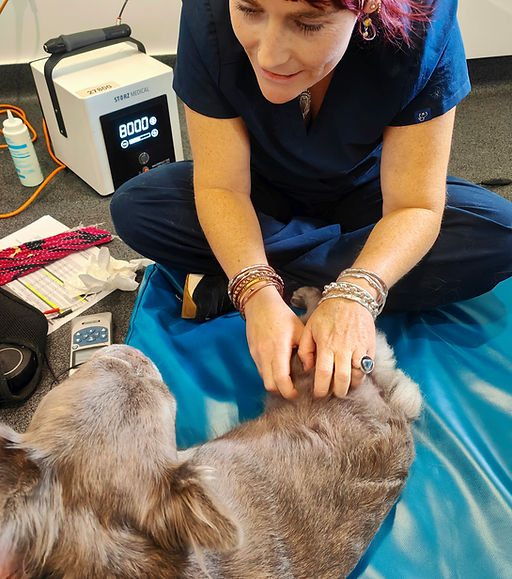
Neurological Rehabilitation
Dogs with neurological conditions often require highly tailored rehabilitation support.
We commonly see dogs affected by:
-
IVDD (Intervertebral Disc Disease)
-
Hindlimb weakness
-
Spinal injuries
-
Nerve dysfunction
-
Mobility decline
Neurological rehabilitation may focus on:
-
Balance and coordination
-
Strengthening
-
Movement retraining
-
Confidence building
-
Functional mobility
Every neurological patient is different, and rehabilitation plans are adapted carefully around the dog’s abilities and safety.

Sporting and Active Dogs
Working and active dogs place significant demands on their musculoskeletal system.
Sporting dogs may develop:
-
Tendon injuries
-
Muscle strain
-
Reduced performance
-
Compensation patterns
-
Recurrent soreness
Rehabilitation may help active dogs improve:
-
Strength
-
Stability
-
Recovery
-
Movement efficiency
-
Injury prevention
Learn more about Animal Biomechanical Medicine and shockwave therapy for dogs.


Signs Your Dog May Benefit From Rehabilitation
Many owners are unsure whether their dog’s changes are serious enough to warrant rehabilitation assessment.
Signs that may indicate your dog could benefit include:
-
Limping
-
Slowing down
-
Stiffness after rest
-
Difficulty getting into the car
-
Reluctance to jump
-
Slipping on floors
-
Muscle loss
-
Reduced endurance
-
Weight shifting
-
Difficulty with stairs
-
Delayed recovery after surgery
-
Weakness or wobbliness
Sometimes the signs are subtle and progressive. Dogs often adapt quietly before owners realise how much mobility has changed.
What Happens During a Canine Rehabilitation Assessment?
At Balance Vet Rehab, rehabilitation starts with understanding the whole dog.
Initial rehabilitation consultations typically take around 1–1.5 hours and may include:
-
Detailed history-taking
-
Review of X-rays and previous diagnostics
-
Full-body musculoskeletal assessment
-
Gait and posture analysis
-
Joint mobility assessment
-
Strength testing
-
Rehabilitation treatment session
-
Home exercise planning
-
Discussion of realistic treatment goals
Because rehabilitation is highly individualised, treatment plans vary significantly depending on the dog’s condition, age, temperament, mobility, and lifestyle.
Treatment approaches may include:
-
Rehabilitation exercises
-
Hydrotherapy
-
Laser therapy
-
Shockwave therapy
-
Acupuncture
-
Manual therapy
-
Mobility work
Strengthening programs

You’re welcome to ask questions first — there’s no obligation to proceed with treatment.

Why Early Rehabilitation Matters
Many owners wait until mobility problems become severe before seeking rehabilitation support.
However, early intervention may help:
-
Reduce compensation patterns
-
Maintain muscle mass
-
Improve recovery after surgery
-
Slow functional decline
-
Improve confidence and comfort
-
Support long-term mobility
-
Dogs are often extremely resilient and may continue coping long after discomfort begins.
Rehabilitation aims to help dogs not just “cope,” but function more comfortably and confidently.
A Whole-Body Approach to Rehabilitation
At Balance Vet Rehab, we focus on the entire patient rather than just one painful joint or isolated injury.
This means considering:
-
Strength
-
Mobility
-
Posture
-
Compensation patterns
-
Lifestyle
-
Weight
-
Environment
-
Activity goals
-
Pain management
-
Long-term sustainability
-
Every rehabilitation plan is tailored around what matters most to both the dog and the owner.
For some dogs, success means returning to sport.
For others, it means comfortably getting up, walking to the park, or enjoying daily life again.


Veterinary Rehabilitation Across Brisbane, Gold Coast & Scenic Rim
Balance Vet Rehab supports dogs from across:
-
Brisbane
-
Gold Coast
-
Scenic Rim
-
Tamborine Mountain
-
Logan
-
Northern Gold Coast
-
Western Brisbane surrounds
-
Many owners travel to us because they are looking for a comprehensive, rehabilitation-focused approach to helping their dog move and feel better.
You may also find these pages helpful:
-
Hydrotherapy for dogs
-
Dog arthritis treatment
-
Post-surgical rehabilitation for dogs
-
Laser therapy for dogs
-
Acupuncture for dogs
-
Shockwave therapy for dogs
-
Dog limping and mobility problems
Real Owners. Real Rehabilitation Journeys.
Watching a dog struggle with mobility changes can be emotionally difficult.
Many owners come to us feeling worried, uncertain, or frustrated after trying rest, medication, or previous treatments without seeing the improvement they hoped for.
Our goal is always to provide compassionate, realistic rehabilitation support focused on improving comfort, movement, and quality of life.
This varies depending on the condition,
Helping Dogs Stay Comfortable, Strong and Mobile
Whether your dog is recovering from surgery, struggling with arthritis, slowing down with age, or simply not moving normally, rehabilitation may help improve comfort, confidence, and quality of life.
We’re happy to discuss whether a rehabilitation assessment may be appropriate for your dog.
