

Veterinary Laser Therapy for Dogs in Brisbane
When your dog is sore, stiff, recovering from surgery, or not moving comfortably anymore, it’s natural to start searching for ways to help them feel better without immediately escalating to more invasive treatment.
Veterinary laser therapy is a non-invasive rehabilitation treatment commonly used to support pain relief, healing, and mobility in dogs with musculoskeletal and neurological conditions.
At Balance Vet Rehab, laser therapy is incorporated into individual rehabilitation plans designed around your dog’s specific condition, comfort level, lifestyle, and long-term goals.
We regularly help dogs from Brisbane, the Gold Coast, and Scenic Rim experiencing arthritis, soft tissue injuries, post-operative discomfort, mobility decline, and chronic pain conditions.
Just researching options for your dog? We’re happy to answer questions with no pressure to book.
What Is Veterinary Laser Therapy?
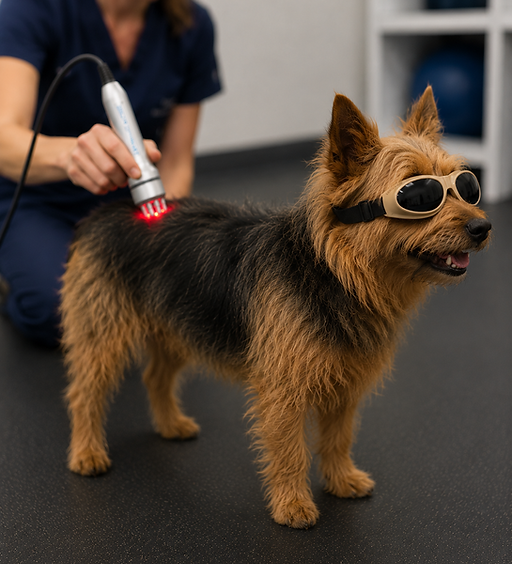
Veterinary laser therapy — sometimes called cold laser or photobiomodulation therapy — uses specific wavelengths of light directed into tissues to help stimulate cellular activity.
The treatment is painless and non-invasive. Many dogs find sessions relaxing and comfortably tolerate treatment.
Laser therapy is commonly used in veterinary rehabilitation to help support:
-
Pain reduction
-
Inflammation management
-
Tissue healing
-
Muscle recovery
-
Improved mobility
-
Post-operative rehabilitation
It is frequently combined with other rehabilitation approaches such as:
-
Hydrotherapy
-
Strengthening exercises
-
Mobility work
-
Manual therapy
-
Weight management
-
Home exercise programs

At Balance Vet Rehab, laser therapy is never viewed as a standalone cure. Instead, it forms part of a comprehensive rehabilitation strategy aimed at improving your dog’s overall function and quality of life.
How Laser Therapy May Help Dogs
Laser therapy works by delivering light energy into tissues, where it may help stimulate biological processes associated with healing and pain modulation.
Depending on the condition, goals of treatment may include:
-
Reducing inflammation
-
Improving circulation
-
Supporting tissue repair
-
Decreasing pain sensitivity
-
Helping muscles relax
-
Improving movement comfort
-
For owners, the changes are often noticed gradually:
-
Easier rising from rest
-
More willingness to walk
-
Improved stamina
-
Less stiffness after exercise
-
Better comfort during daily activities
-
Improved mood and engagement
Every dog responds differently, and outcomes depend on factors such as diagnosis, severity, chronicity, body condition, age, and concurrent disease.
Unsure whether laser therapy is appropriate for your dog? We’re happy to talk through your pet’s situation before you make any decisions.

Conditions Commonly Treated With Laser Therapy
Laser Therapy for Arthritis in Dogs
Arthritis is one of the most common reasons owners seek laser therapy.
Dogs with arthritis often experience:
-
Stiffness after resting
-
Difficulty getting up
-
Reduced exercise tolerance
-
Slowing down on walks
-
Reluctance to jump or climb stairs
Laser therapy may help some arthritic dogs by improving comfort and reducing inflammation around affected joints.
Because arthritis management is usually long-term, laser therapy is commonly combined with:
-
Rehabilitation exercises
-
Hydrotherapy
-
Weight management
-
Joint support strategies
-
Pain management plans
Learn more about arthritis treatment for dogs and hydrotherapy for arthritic dogs.
Laser Therapy After Surgery
Laser therapy is frequently used during post-operative rehabilitation to support recovery and comfort.
Conditions commonly seen after surgery include:
-
Muscle tightness
-
Reduced weight-bearing
-
Swelling
-
Protective movement patterns
-
Reduced mobility
-
Delayed return to strength
Laser therapy may be incorporated into rehabilitation programs following:
-
TPLO surgery
-
Cruciate ligament surgery
-
Patella luxation surgery
-
Spinal surgery
-
Fracture repair
-
Orthopaedic procedures
Treatment timing is carefully tailored around healing stages and surgical recommendations.
Learn more about post-surgical rehabilitation for dogs.


Laser Therapy for Soft Tissue Injuries
Soft tissue injuries involve muscles, tendons, and ligaments. These injuries can sometimes become chronic, especially in active or sporting dogs.
Laser therapy may be considered for:
-
Muscle strains
-
Tendon injuries
-
Iliopsoas injuries
-
Back pain
-
Neck pain
-
Chronic forelimb lameness
These cases often benefit from a combined rehabilitation approach involving controlled strengthening and movement retraining.
Learn more about dog limping and mobility problems and supraspinatus tendon injuries in dogs.

Laser Therapy for Neurological Conditions
Some neurological rehabilitation patients may also benefit from laser therapy as part of their overall management plan.
This may include dogs recovering from:
-
IVDD (Intervertebral Disc Disease)
-
Spinal surgery
-
Nerve injury
-
Weakness or mobility decline
Neurological rehabilitation is highly individual, and treatment plans are tailored carefully around function, safety, and realistic goals.
Learn more about IVDD rehabilitation for dogs.


Signs Your Dog May Benefit From Rehabilitation Assessment
Many dogs referred for laser therapy are showing signs that their movement or comfort is changing, including:
-
Limping
-
Slowing down
-
Stiffness after rest
-
Difficulty jumping
-
Reluctance to exercise
-
Muscle loss
-
Soreness after activity
-
Reduced endurance
-
Changes in posture or gait
-
Difficulty recovering after surgery
These signs are often gradual and can easily be mistaken for normal ageing.
A rehabilitation assessment helps determine:
-
What may be causing the problem
-
Whether laser therapy is appropriate
-
Which other treatments may help
-
How to improve movement safely
What Happens During a Laser Therapy Appointment?
At Balance Vet Rehab, treatment starts with understanding the entire patient — not just the painful area.
Initial rehabilitation consultations typically take around 1–1.5 hours and may include:
-
Detailed history-taking
-
Review of X-rays or other diagnostics
-
Full-body movement assessment
-
Strength and mobility evaluation
-
Rehabilitation treatment session
-
Home exercise planning
-
Discussion of realistic treatment goals
Laser therapy itself is generally very well tolerated and often performed while dogs remain relaxed beside their owner or therapist.
Sessions are tailored according to:
-
Tissue involved
-
Depth of injury
-
Stage of healing
-
Comfort levels
Overall rehabilitation goals

You’re welcome to ask questions first — there’s absolutely no obligation to proceed with treatment.

Is Laser Therapy Safe for Dogs?
When used appropriately by trained veterinary professionals, laser therapy is generally considered very safe.
Treatment decisions are based on:
-
Diagnosis
-
Location of injury
-
Stage of healing
-
Medical history
-
Concurrent conditions
-
Individual comfort and response
Not every condition is suitable for laser therapy, which is why assessment and treatment planning are important.
At Balance Vet Rehab, laser therapy is integrated carefully into broader rehabilitation plans rather than used as a one-size-fits-all treatment.
How Many Laser Therapy Sessions Does a Dog Need?
The number of sessions varies depending on:
-
The condition being treated
-
Severity of symptoms
-
Chronicity of injury
-
Rehabilitation goals
-
Response to therapy
Some dogs improve quickly, while others benefit from ongoing maintenance or combined rehabilitation support.
Long-term success often comes from combining therapies thoughtfully, including:
-
Strengthening exercises
-
Controlled exercise progression
-
Weight management
-
Hydrotherapy
-
Pain management
-
Environmental modification
Owner education

Veterinary Rehabilitation Across Brisbane, Gold Coast & Scenic Rim
Balance Vet Rehab supports dogs from across:
-
Brisbane
-
Gold Coast
-
Scenic Rim
-
Tamborine Mountain
-
Logan
-
Northern Gold Coast
-
Western Brisbane surrounds
Many owners seek rehabilitation care because they want a more comprehensive approach to mobility, comfort, and recovery.
You may also find these pages helpful:
-
Canine rehabilitation assessments
-
Hydrotherapy for dogs
-
Dog arthritis treatment
-
Post-surgical rehabilitation for dogs
-
Dog reluctant to walk
Dog limping and mobility problems
Real Owners. Real Rehabilitation Journeys.
We understand how difficult it can be watching your dog struggle with pain or mobility changes.
Many owners come to us feeling uncertain, overwhelmed, or worried about what the future might look like for their pet. Our goal is always to provide thoughtful, realistic rehabilitation support focused on improving comfort and quality of life.
FAQ: Laser for Dogs
Helping Dogs Move More Comfortably Again
If your dog is slowing down, struggling with mobility, or recovering from injury or surgery, rehabilitation may help improve comfort, strength, and confidence.
We’re happy to discuss whether laser therapy may be appropriate as part of your dog’s rehabilitation plan.

Still Exploring Your Options?
Whether you’re early in your research or already considering rehabilitation, we’re happy to answer questions about treatment suitability, pricing, and appointment availability.
No pressure and no commitment — we’re simply here to help you understand your options for your dog.